
The ideas behind every Problem.
Four frameworks shape how a CMP4 Problem is written, taught, and learned from. They are worth knowing before you open your first Problem — and worth returning to once you have taught one.
CMP4 STEM Problem Format
How every CMP4 Problem is organized.
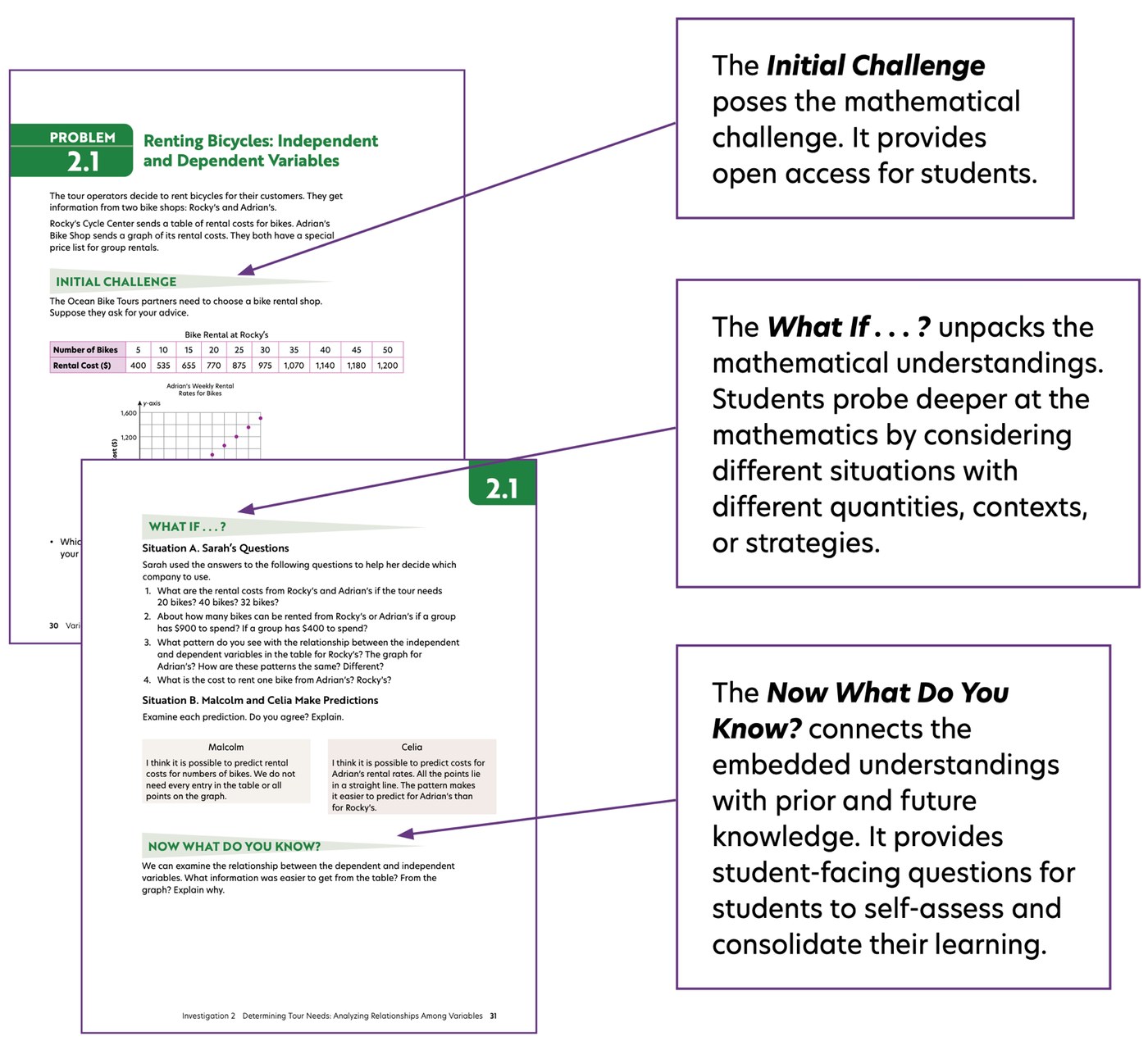
Every CMP4 Problem follows the same three-part structure. The Initial Challenge poses the mathematical challenge and gives students open access to it. What If…? unpacks the mathematics, asking students to probe further across different quantities, contexts, and strategies. Now What Do You Know? connects the embedded understandings to prior and future knowledge, and gives students a way to consolidate their learning.
Launch-Explore-Summarize
The instructional model used throughout CMP4.
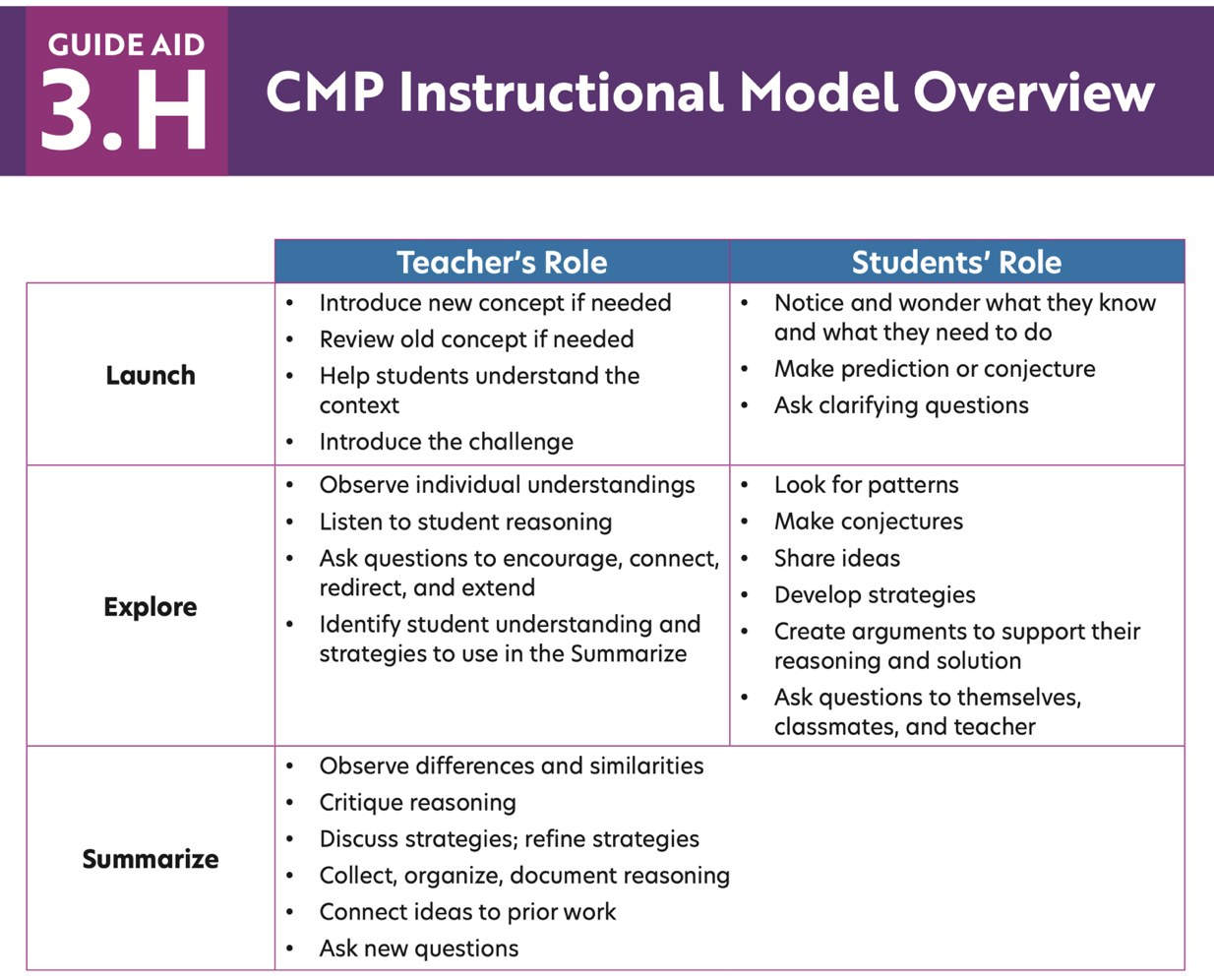
A CMP lesson moves through three phases. In the Launch, the teacher introduces the context and the challenge. In the Explore, students work on the mathematics while the teacher observes, listens, and asks questions that connect and extend their reasoning. In the Summarize, the class draws the mathematics together — comparing strategies, critiquing reasoning, and connecting ideas to prior work.
The Arc of Learning
How mathematical ideas develop across Problems and Units.
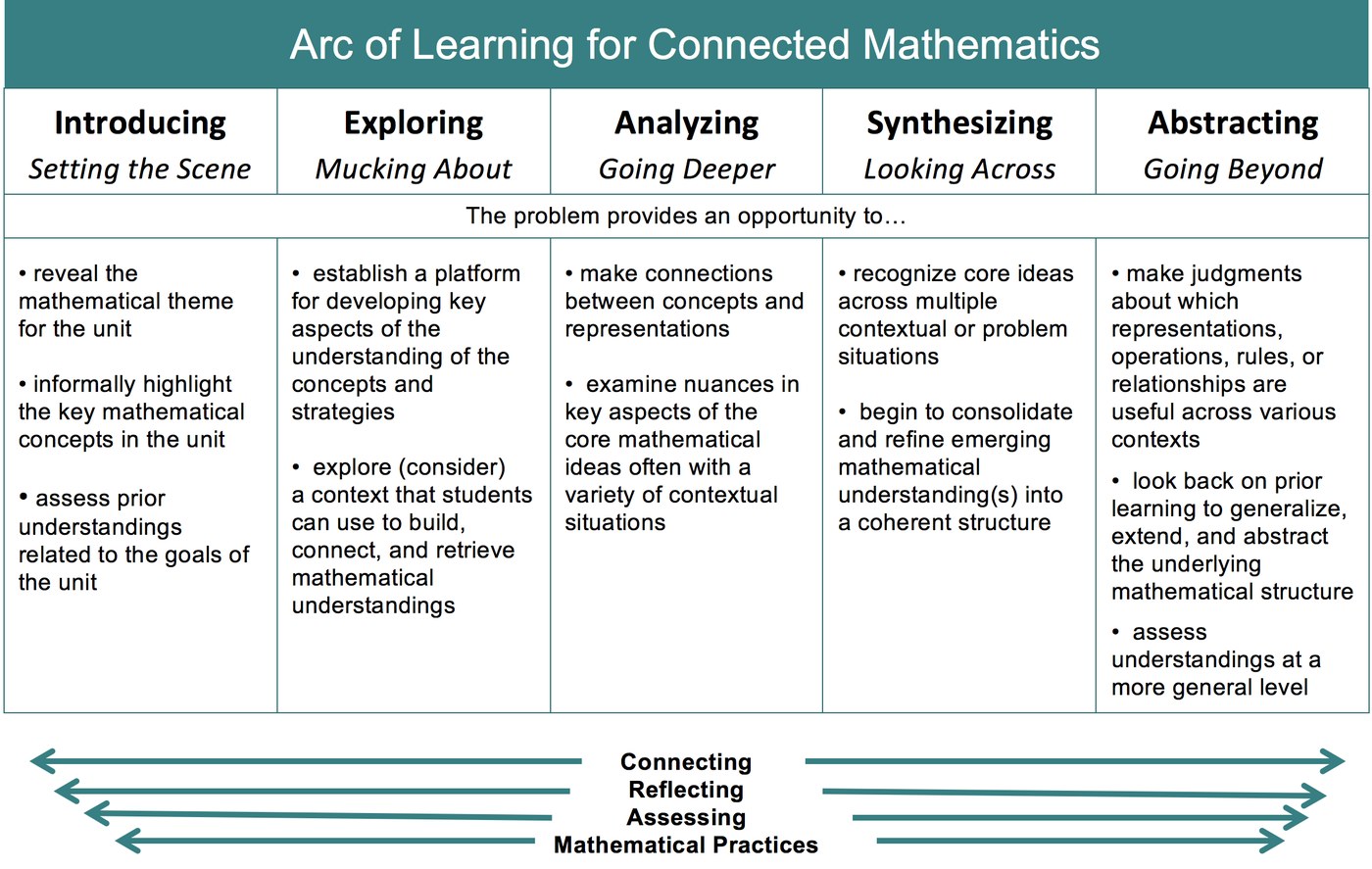
Understanding does not arrive all at once. The Arc of Learning names five phases a mathematical idea passes through across a Unit — Introducing, Exploring, Analyzing, Synthesizing, and Abstracting — and describes what a Problem makes possible at each one. It is what lets you see where a single Problem sits in a longer story.
Attending to Individual Learning Needs
Reaching every student in the room.
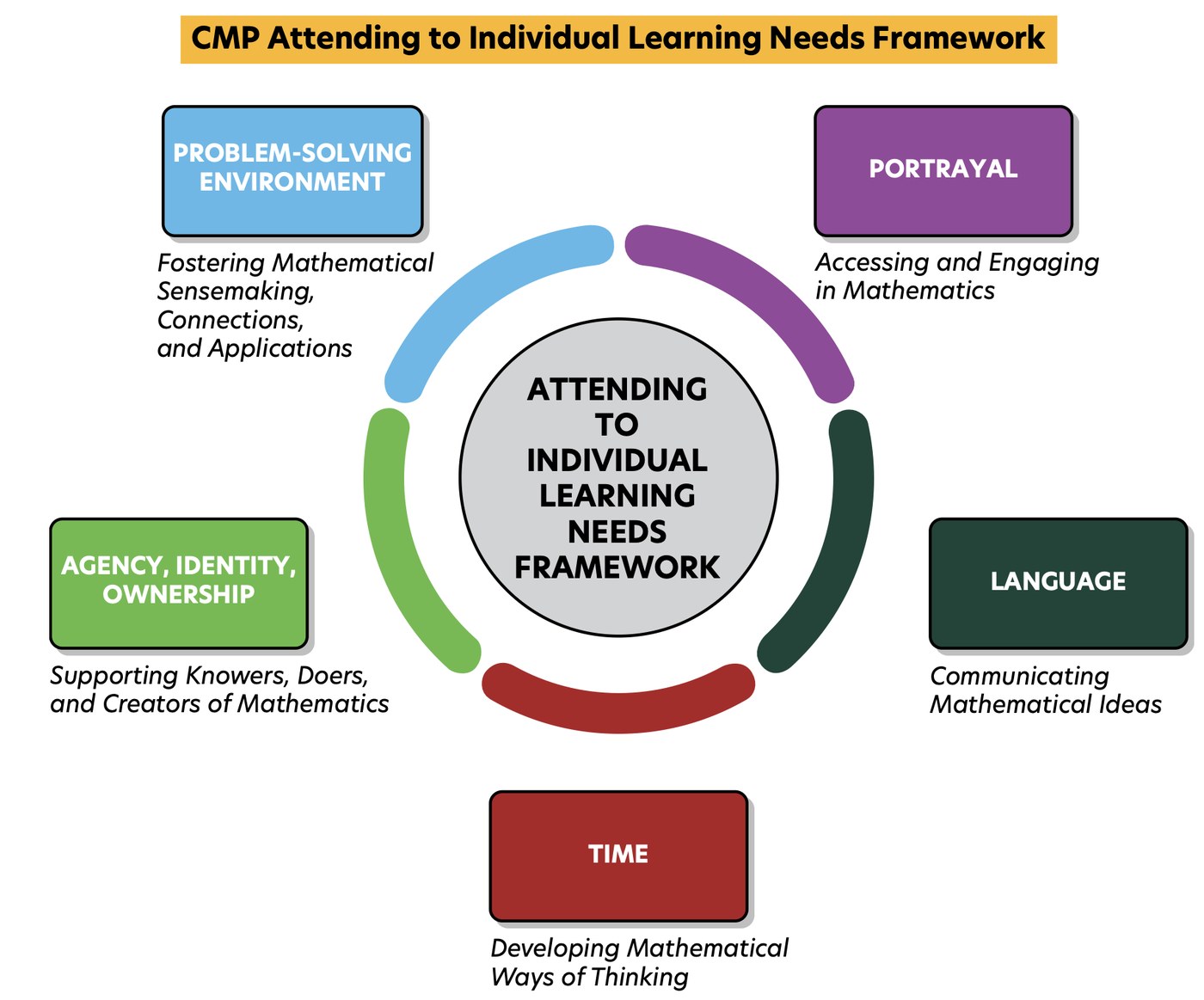
The AILN framework gathers five lenses for supporting each learner during a Problem: the problem-solving environment, portrayal, agency and identity, language, and time. Together they turn "differentiation" from a vague aspiration into a set of concrete decisions you can make while planning and while teaching.
Supporting material.
Practical documents that sit alongside the frameworks.
General Pedagogical Strategies
Concrete moves that support the instructional model.
Sign up to downloadReady to see the Problems?
Fourteen field-tested CMP4 Problems, free for university teacher education.